My jack scale
Posted: Fri Jun 26, 2009 2:53 pm
Have you ever wanted to weigh your vehicle (each corner, etc) and didn't want to go to a gravel pit or scrap dealer to get it weighed?
Here is a little trick I learned from professor95 over on the RV forum.
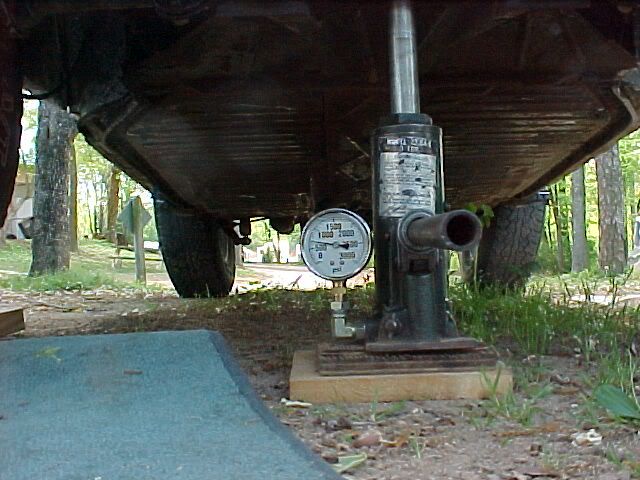
"My homemade jack scale.
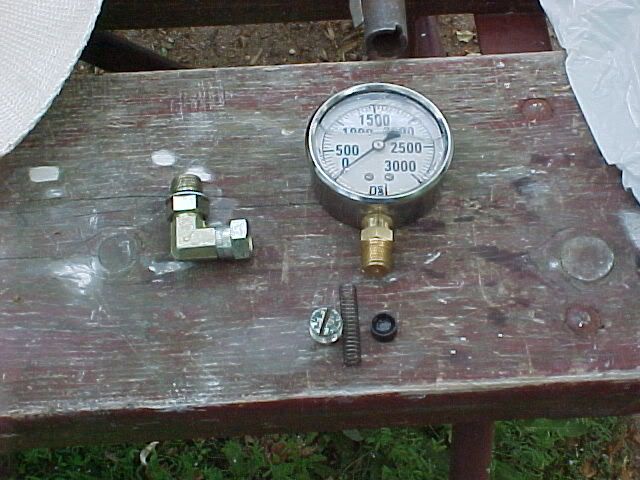
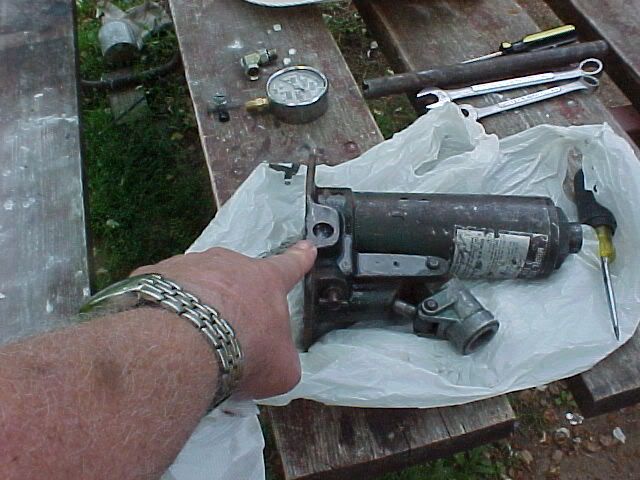
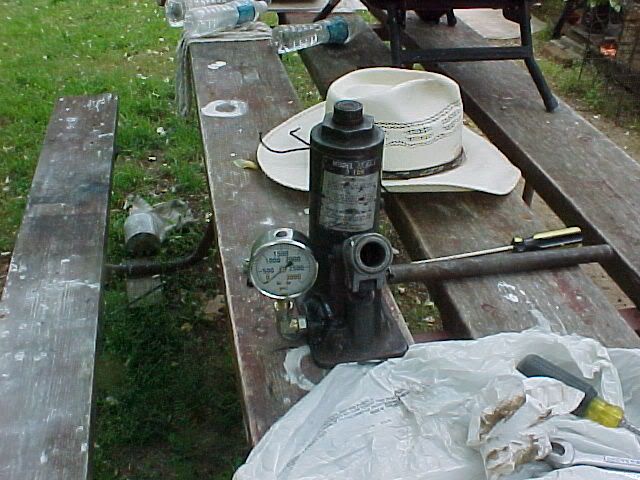
You will need to locate a hydraulic bottle jack that has a service port. This will be a screw out plug on the bottom of the jack. Unfortunately, jacks at Wal-Mart and Pep Boys (made in China) no longer seem to have the service port. So, you may need to search out yard sales or an older friends garage to find a bottle jack with the port. Remove the plug from this port and install a pressure gauge - I selected a liquid filled gauge that will measure up to 3,000#. To convert this to weight, measure the diameter of the jack cylinder (mine was 1.125 inches) and apply a little math to get the area of the cylinder (3.14 x radius squared). In my case 1.125 diameter /2=0.5625 radius x 0.5625 radius = 0.3164 x 3.14159 (pie) = 0.994 (my jack factor). Multiply the area by the pressure and you get weight.
The above information was originally found on an RV Camper forum and written by “Professor95”.
I changed the numbers to match my jack dimensions.
If you use a jack with a 1-1/8” cylinder you can use the direct read from the gauge and be accurate within 6 pounds per thousand. Gauge reading =1000# = 994# actual.
Gauge at Northern Tool was 12 bucks and the adapter fitting was about $6.59.
If you have a rubber plug and spring behind the service port metal screw remove the rubber and leave the spring. If the spring is so small in diameter that it slides into the new fitting you should cut a small hole in the rubber disk and use it as a spring stop. I think the spring holds pressure on a metal ball valve.
The front of my Baja weighs 706#
Dia Factor
1.125 0.994018711
1.5 1.767144375
2 3.14159
2.5 4.908734375
Here are the pictures 1-4.
Marvin
Here is a little trick I learned from professor95 over on the RV forum.
"My homemade jack scale.
You will need to locate a hydraulic bottle jack that has a service port. This will be a screw out plug on the bottom of the jack. Unfortunately, jacks at Wal-Mart and Pep Boys (made in China) no longer seem to have the service port. So, you may need to search out yard sales or an older friends garage to find a bottle jack with the port. Remove the plug from this port and install a pressure gauge - I selected a liquid filled gauge that will measure up to 3,000#. To convert this to weight, measure the diameter of the jack cylinder (mine was 1.125 inches) and apply a little math to get the area of the cylinder (3.14 x radius squared). In my case 1.125 diameter /2=0.5625 radius x 0.5625 radius = 0.3164 x 3.14159 (pie) = 0.994 (my jack factor). Multiply the area by the pressure and you get weight.
The above information was originally found on an RV Camper forum and written by “Professor95”.
I changed the numbers to match my jack dimensions.
If you use a jack with a 1-1/8” cylinder you can use the direct read from the gauge and be accurate within 6 pounds per thousand. Gauge reading =1000# = 994# actual.
Gauge at Northern Tool was 12 bucks and the adapter fitting was about $6.59.
If you have a rubber plug and spring behind the service port metal screw remove the rubber and leave the spring. If the spring is so small in diameter that it slides into the new fitting you should cut a small hole in the rubber disk and use it as a spring stop. I think the spring holds pressure on a metal ball valve.
The front of my Baja weighs 706#
Dia Factor
1.125 0.994018711
1.5 1.767144375
2 3.14159
2.5 4.908734375
Here are the pictures 1-4.
Marvin

 Otherwise, note.