Watercoold Pics...
-
Jeff20B
- Posts: 62
- Joined: Fri Oct 18, 2002 1:01 am
Watercoold Pics...
zenjoe, how did you run your exhaust? I'm thinking of using a stock 13B cast iron manifold and a 180º U bend pipe.
-
VWDragon
- Posts: 32
- Joined: Wed Oct 02, 2002 1:01 am
Watercoold Pics...
There's a 68 bug in Temple Texas that has a 355 with three speed automatic transmission that he said he would take $1750 for.
Here's the link: http://www.thesamba.com/vw/classifieds/ ... 2240103915
I believe that would qualify as a conversion perversion.
Here's the link: http://www.thesamba.com/vw/classifieds/ ... 2240103915
I believe that would qualify as a conversion perversion.
-
Baja Wes
- Posts: 239
- Joined: Wed Jun 05, 2002 12:01 am
Watercoold Pics...
I still think above the gearbox / rear luggage area would be the best place for a Baja radiator. Up and out of the way. I will use a cover so the air doesn't flow into the cabin. It is a legal requirement in australia to prevent exhaust gases from entering the cabin.
I know if I put mine at the side it would get full of sand / mud, cos the sides of my engine get covered like that. I am trying to decided between cable operated flaps to scoop air from under the car on the highway, and/or ducts from under my running boards to the radiator. I think I should be able to get enough air in there.
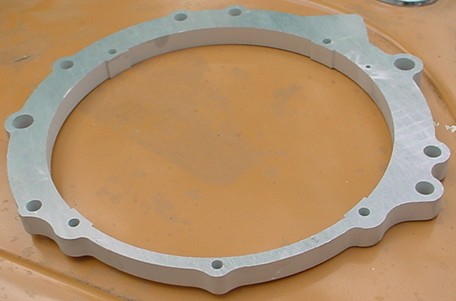
I decided to make my own adaptor plate. Cost me AUS$66 (US$33 approx).
http://offroadvw.net/bajawes/linktoV6.htm
I know if I put mine at the side it would get full of sand / mud, cos the sides of my engine get covered like that. I am trying to decided between cable operated flaps to scoop air from under the car on the highway, and/or ducts from under my running boards to the radiator. I think I should be able to get enough air in there.
I decided to make my own adaptor plate. Cost me AUS$66 (US$33 approx).
http://offroadvw.net/bajawes/linktoV6.htm
-
crack monkey
- Posts: 1358
- Joined: Tue Feb 05, 2002 12:01 am
Watercoold Pics...
i know a local guy who put a 350 in the front of his bug. all he did for air to get to the radiator was put two holes in the front apron under the hood. he says that his temp has never gotten high at all (he drives it on the highways regularly.) and these seemingly small holes are quite able to do the job. cool part is that he runs a stock steel hood with the only mod is a rather large hole for the blower.
-
VWDragon
- Posts: 32
- Joined: Wed Oct 02, 2002 1:01 am
Watercoold Pics...
Wes, wish I could make my own as you did...If I could do that, I would already have my soob motor in the bus. Looks good from here!!!! As far as the radiator goes, it's just like asking "what kind of oil is best"....Depends on what works for you. Mine works well right where it's at with no mud problems or anything.
Mine works well right where it's at with no mud problems or anything.-
Mike T
- Posts: 102
- Joined: Tue Nov 06, 2001 12:01 am
Watercoold Pics...
<BLOCKQUOTE><font size="1" face="Verdana, Arial">quote:</font><HR>Originally posted by Baja Wes:
<B>I still think above the gearbox / rear luggage area would be the best place for a Baja radiator. Up and out of the way. I will use a cover so the air doesn't flow into the cabin. It is a legal requirement in australia to prevent exhaust gases from entering the cabin.
I know if I put mine at the side it would get full of sand / mud, cos the sides of my engine get covered like that. I am trying to decided between cable operated flaps to scoop air from under the car on the highway, and/or ducts from under my running boards to the radiator. I think I should be able to get enough air in there.
I decided to make my own adaptor plate. Cost me AUS$66 (US$33 approx).
http://offroadvw.net/bajawes/linktoV6.htm </B><HR></BLOCKQUOTE>
Wes,
I see you have incorporated the locating dowels for the adapter plate to engine interface, that centers the adapter to the engine positively.
What method are you using to assure the adapter is properly centered to the VW Transaxle?
Mike T.
<B>I still think above the gearbox / rear luggage area would be the best place for a Baja radiator. Up and out of the way. I will use a cover so the air doesn't flow into the cabin. It is a legal requirement in australia to prevent exhaust gases from entering the cabin.
I know if I put mine at the side it would get full of sand / mud, cos the sides of my engine get covered like that. I am trying to decided between cable operated flaps to scoop air from under the car on the highway, and/or ducts from under my running boards to the radiator. I think I should be able to get enough air in there.
I decided to make my own adaptor plate. Cost me AUS$66 (US$33 approx).
http://offroadvw.net/bajawes/linktoV6.htm </B><HR></BLOCKQUOTE>
Wes,
I see you have incorporated the locating dowels for the adapter plate to engine interface, that centers the adapter to the engine positively.
What method are you using to assure the adapter is properly centered to the VW Transaxle?
Mike T.
-
Baja Wes
- Posts: 239
- Joined: Wed Jun 05, 2002 12:01 am
Watercoold Pics...
yes your right I have used the dowels on the engine to locate it.
As for the trans, I will thread M10 studs into the adaptor to bolt to the trans. The inside diameter of the adaptor is exactly the same as the inside diamter of the bellhousing.
So my plan is two options.
(1) Visually line up the bellhousing and adaptor ID's, and then bolt them together, then tack weld the adaptor to the bellhousing in a few places.
(2) If my bolts are perfectly central in the bellhousing bolt holes (depending on how good my measuring was), I will make some sleeves for the bolts. The sleeves will make the bolts essentially fitted bolts in the bellhousing. Similar to how a type 2 CV gets it's alignment from fitted bolts. This would be my preferred method.
The type 2 bellhousing also has a 7.5mm ID hole in the bottom at the middle. I have also got this put in the adaptor plate, so I should be able to use a dowel there.
As for the trans, I will thread M10 studs into the adaptor to bolt to the trans. The inside diameter of the adaptor is exactly the same as the inside diamter of the bellhousing.
So my plan is two options.
(1) Visually line up the bellhousing and adaptor ID's, and then bolt them together, then tack weld the adaptor to the bellhousing in a few places.
(2) If my bolts are perfectly central in the bellhousing bolt holes (depending on how good my measuring was), I will make some sleeves for the bolts. The sleeves will make the bolts essentially fitted bolts in the bellhousing. Similar to how a type 2 CV gets it's alignment from fitted bolts. This would be my preferred method.
The type 2 bellhousing also has a 7.5mm ID hole in the bottom at the middle. I have also got this put in the adaptor plate, so I should be able to use a dowel there.
-
Mike T
- Posts: 102
- Joined: Tue Nov 06, 2001 12:01 am
Watercoold Pics...
<BLOCKQUOTE><font size="1" face="Verdana, Arial">quote:</font><HR>Originally posted by Baja Wes:
<B>yes your right I have used the dowels on the engine to locate it.
As for the trans, I will thread M10 studs into the adaptor to bolt to the trans. The inside diameter of the adaptor is exactly the same as the inside diamter of the bellhousing.
So my plan is two options.
(1) Visually line up the bellhousing and adaptor ID's, and then bolt them together, then tack weld the adaptor to the bellhousing in a few places.
(2) If my bolts are perfectly central in the bellhousing bolt holes (depending on how good my measuring was), I will make some sleeves for the bolts. The sleeves will make the bolts essentially fitted bolts in the bellhousing. Similar to how a type 2 CV gets it's alignment from fitted bolts. This would be my preferred method.
The type 2 bellhousing also has a 7.5mm ID hole in the bottom at the middle. I have also got this put in the adaptor plate, so I should be able to use a dowel there.</B><HR></BLOCKQUOTE>
Getting the engine and trans on the same centerline is essential for good input shaft bearing life. A misalignment there can even cause clutch problems. Looks like you're on track with your solution.
Mike T.
<B>yes your right I have used the dowels on the engine to locate it.
As for the trans, I will thread M10 studs into the adaptor to bolt to the trans. The inside diameter of the adaptor is exactly the same as the inside diamter of the bellhousing.
So my plan is two options.
(1) Visually line up the bellhousing and adaptor ID's, and then bolt them together, then tack weld the adaptor to the bellhousing in a few places.
(2) If my bolts are perfectly central in the bellhousing bolt holes (depending on how good my measuring was), I will make some sleeves for the bolts. The sleeves will make the bolts essentially fitted bolts in the bellhousing. Similar to how a type 2 CV gets it's alignment from fitted bolts. This would be my preferred method.
The type 2 bellhousing also has a 7.5mm ID hole in the bottom at the middle. I have also got this put in the adaptor plate, so I should be able to use a dowel there.</B><HR></BLOCKQUOTE>
Getting the engine and trans on the same centerline is essential for good input shaft bearing life. A misalignment there can even cause clutch problems. Looks like you're on track with your solution.
Mike T.